ChatGPT rank tracking is the practice of monitoring how, and how often, your brand appears inside ChatGPT answers when real users ask questions about your category.
Unlike traditional search, ChatGPT does not return a list of ten blue links for a user to click through. It synthesises information from multiple sources into a single answer and names only a small handful of brands in that answer. ChatGPT rank tracking watches that answer: whether your brand is named, where in the answer it appears, how it is described, which sources are cited, and which competitors appear alongside you.
That is why it is best understood as a measurement layer for AI search, not as a new version of keyword ranking. The unit of measurement is a mention inside an answer, not a position on a results page. A brand can rank first on Google for a keyword and still be invisible in ChatGPT, because ChatGPT may draw its answer from different sources, or may not name the brand at all.
What Does ChatGPT Rank Tracking Mean?
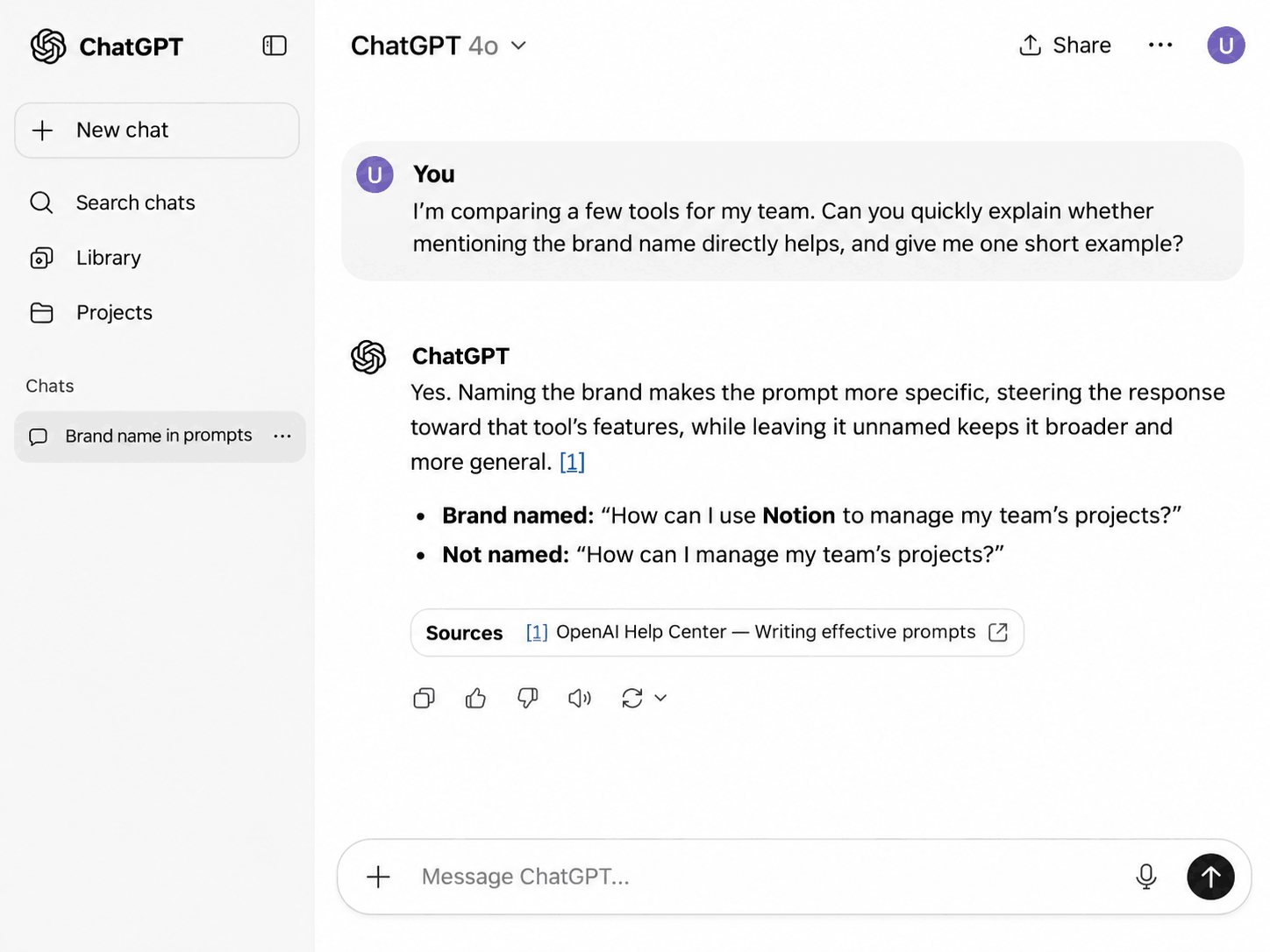
ChatGPT rank tracking means running a fixed set of real, buyer-style prompts through ChatGPT on a regular schedule and recording what comes back, prompt by prompt.
Those prompts are the questions your buyers actually ask, such as the best tool for a job, the best agency for a service, or how to solve a specific problem. A tracker runs the same prompts repeatedly, so results are comparable over time, and logs each answer: brand mentions, cited sources, the order brands appear in, and the tone of the description.
Over time, that log becomes a trend, not a one-off screenshot. You can see whether your brand is appearing more or less often, whether a competitor has started to dominate a prompt set, and whether the sources ChatGPT cites for your category are changing. For a full list of tools that do this tracking, see the pillar guide on Best ChatGPT Rank Tracking Tools.
What Does ChatGPT Rank Tracking Measure?
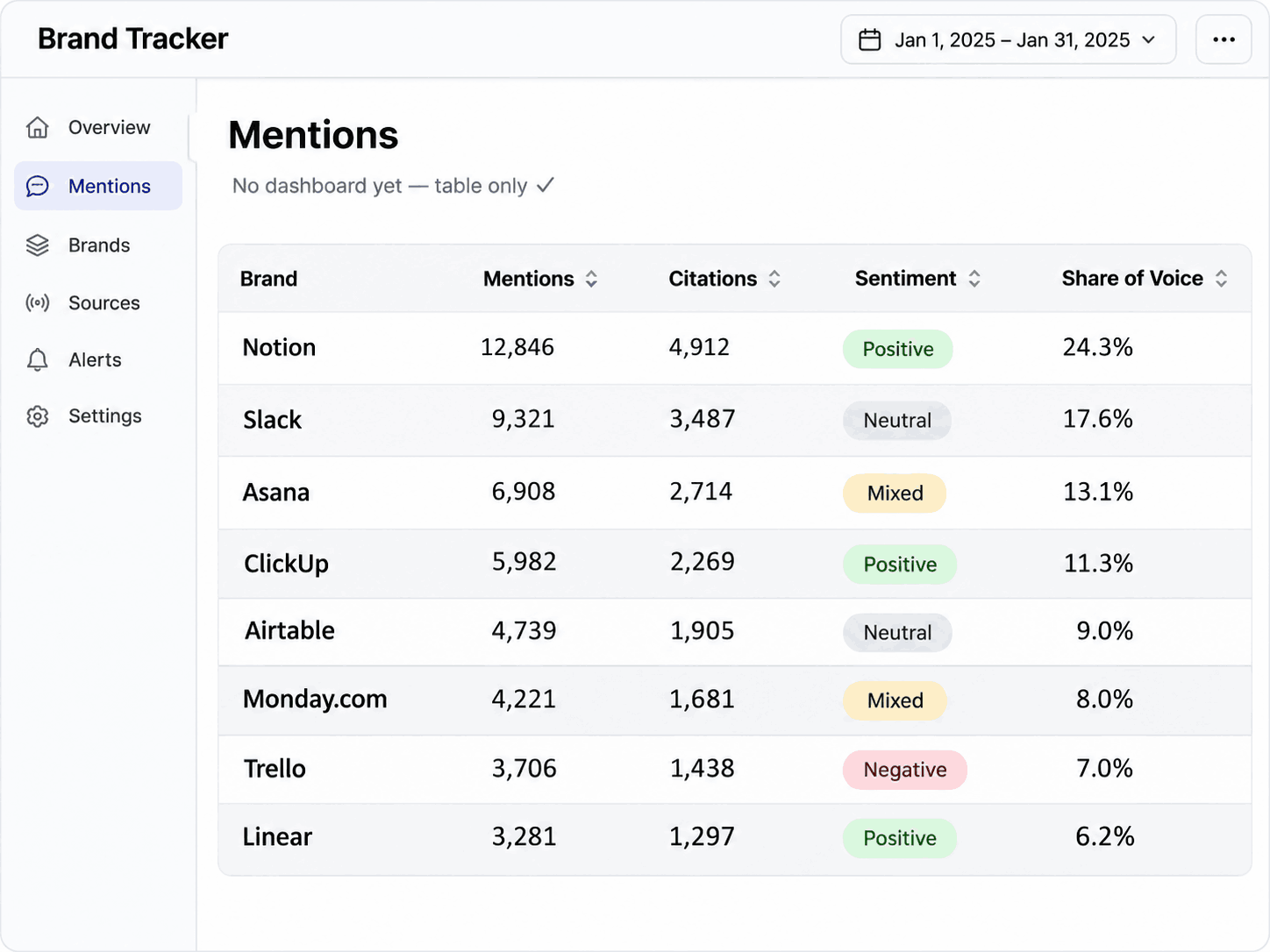
ChatGPT rank tracking measures four things: brand mentions, citations, sentiment, and share of voice inside ChatGPT answers.
Brand mentions, or visibility, measure whether your brand is named at all for a given prompt, and in what share of your tracked prompts it appears. Citations measure which specific pages ChatGPT links to as sources when it forms an answer, because those cited pages are the levers you can actually influence with content and authority.
Sentiment measures how ChatGPT describes your brand when it mentions you: recommended, neutral, or warned against, and whether that description is accurate. Share of voice measures your slice of all brand mentions across a prompt set, relative to competitors, so you can see whether you are gaining or losing ground in the answers your buyers read, not just whether you appear.
Placement also matters within those four measures. Being named first, or as the main recommendation, is different from being mentioned in passing at the end of a long answer, and a good tracker records that difference rather than counting every mention as equal.
What ChatGPT Rank Tracking Is Not
ChatGPT rank tracking is not Google rank tracking with a different name, and it is not a single rank number for your brand.
Google rank tracking tells you where a page sits in a ranked list of links. ChatGPT rank tracking tells you whether ChatGPT says your brand name at all when a buyer asks a question, and in what context. There is no position 1 to 10 in a ChatGPT answer in the same sense, because the answer is synthesised, not listed.
It is also not a guarantee. ChatGPT answers vary between runs, by prompt phrasing, by model version, and by geography, so tracking measures a probabilistic trend over repeated runs, not a fixed ranking. A single manual check in your own logged-in account, with its memory and custom instructions, is not measurement, and it should never be reported as a rank.
Who Needs ChatGPT Rank Tracking?
Any brand whose buyers research before they buy needs ChatGPT rank tracking, because more of that research now happens inside AI answers rather than on a results page.
That includes SEO teams and agencies managing client visibility, SaaS and ecommerce brands competing on category questions, and local and service businesses whose buyers ask ChatGPT for recommendations. If a buyer asks ChatGPT for the best option in your category and your brand is not named, you do not exist to that buyer at the exact moment they are deciding.
Small brands need it as much as large ones, for a different reason. A large brand may already be named from training data alone, while a smaller brand must earn its way into answers through cited, authoritative content. Tracking shows whether that work is actually landing, prompt by prompt, instead of leaving it to guesswork.
Why ChatGPT Rank Tracking Matters
ChatGPT rank tracking matters because AI-generated answers have become a discovery layer of their own, sitting between a search query and a website visit.
When ChatGPT recommends a brand, that recommendation carries weight: the user asked a direct question and received a direct answer, with no list to browse and compare. Brands that appear in those answers capture discovery that traditional rank reports cannot see, while brands that do not appear lose it to competitors that AI systems actively recommend.
Tracking also changes what you optimise. Instead of only asking which keywords you rank for, you start asking which prompts trigger your brand, which sources ChatGPT cites for your category, and what content would need to change for those answers to include you. That is the measurement that makes AI visibility work manageable, rather than anecdotal.
Common Misconceptions About ChatGPT Rank Tracking
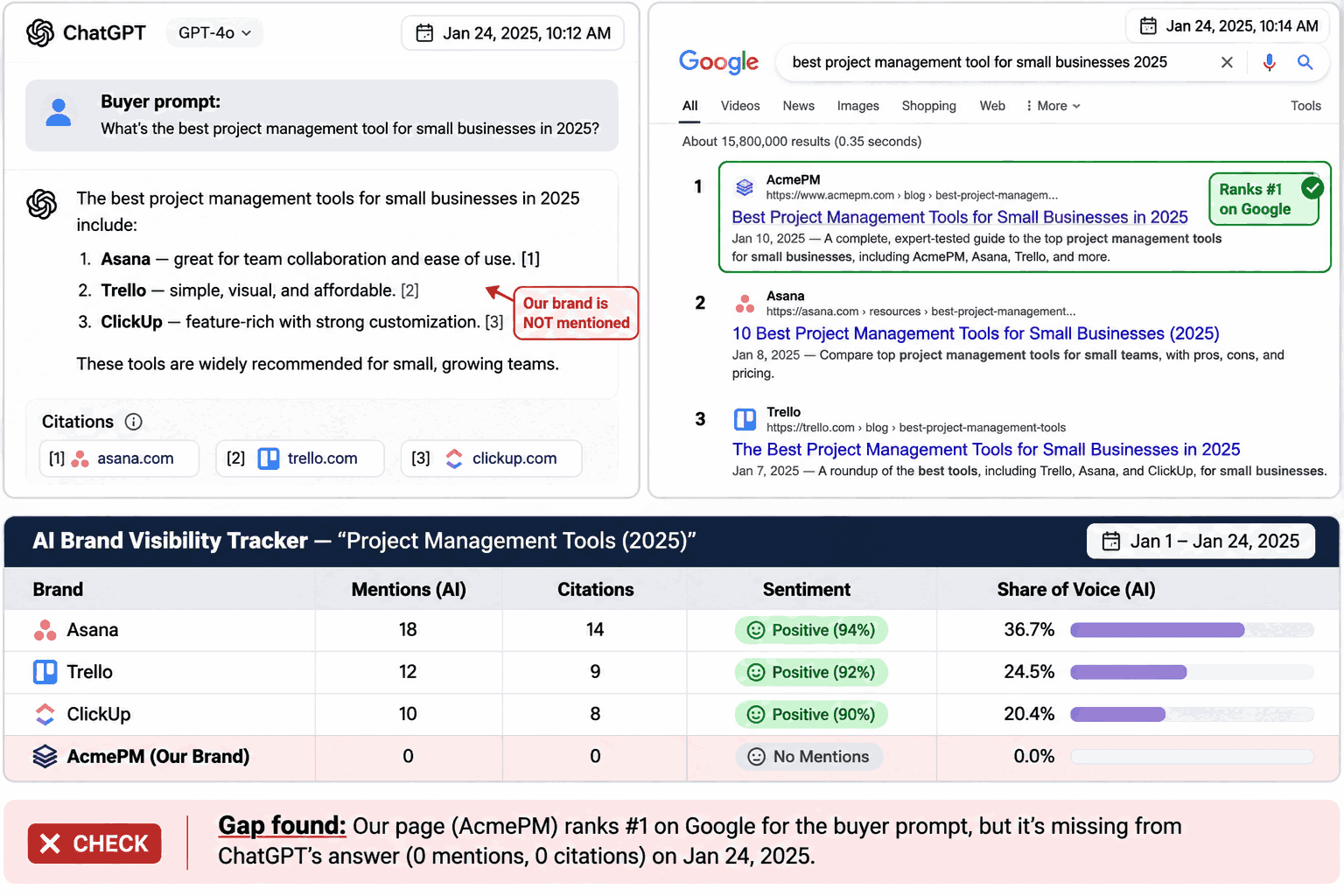
One common misconception is that a high Google ranking automatically means high ChatGPT visibility. It does not, because ChatGPT draws on different sources and synthesises them into an answer, and a top-ranked page can still be absent from that answer.
Another is that ChatGPT rank tracking is only about citations. Citations matter, because they drive traffic and show sourcing, but many ChatGPT answers carry no outbound link at all. A measurement built only on citations would undercount your presence badly, which is why mentions, sentiment, and share of voice must be tracked alongside citations.
A third misconception is that one good result means the job is done. Cited sources rotate frequently, models update, and prompt phrasing changes outcomes, so visibility must be tracked repeatedly over time. The trend, not any single answer, is the real signal.
FAQs
Is ChatGPT rank tracking the same as Google rank tracking?
No, ChatGPT rank tracking is not the same as Google rank tracking. Google rank tracking measures where a page sits in a list of links, while ChatGPT rank tracking measures whether, where, and how a brand is named inside a synthesised answer.
The two measure different things and need different tools, which is why a dedicated comparison of the two approaches is a separate topic in this series. Used together, they give a fuller picture: Google tracking shows your search visibility, and ChatGPT tracking shows your AI answer visibility.
Does ChatGPT rank tracking replace traditional SEO tracking?
No, ChatGPT rank tracking does not replace traditional SEO tracking. It adds a layer that traditional tracking cannot see.
Google search still drives discovery, and traditional rank, traffic, and technical SEO work still matter. ChatGPT tracking sits alongside that work, covering the growing share of discovery that happens inside AI answers, where there are no blue links to rank for in the first place.
Do I need a tool to track ChatGPT rankings?
You can check a few prompts manually, but you cannot track ChatGPT rankings reliably without a tool.
Manual checks vary by account, memory, phrasing, and model version, and they produce no trend, no competitor comparison, and no citation record. A tracker runs a fixed prompt set on a schedule, records mentions, citations, sentiment, and share of voice over time, and stores the answers behind each figure so findings can be verified. For tool options, start with the pillar guide on Best ChatGPT Rank Tracking Tools.
